
Why Is E-Learning So Important?
Though live classes are arguably the most effective ways of engaging the learner and have the highest learning outcomes, they aren’t always feasible. Various e-learning and blended learning (combining live and online) methods can still be effective tools of teaching, and are certainly more cost effective and time effective than ILT (Instructor-Led Training), since the training can be broken down into smaller bite-sized pieces that learners can access remotely and take at their own pace (ideal for our current situation).
Microlearning is also gaining traction in the field of eLearning, which appeals to a more modern learner. This emerging paradigm takes a holistic approach using short-term-focused strategies for skill-based training and development.
So What Have I Created?
This is a portfolio after all :)
As a Learning and Development Specialist for my previous employer, I created dozens of eLearning videos and job aids in conjunction with SMEs (Subject Matter Experts), learning and using authoring tools such as Articulate Rise, Storyline, and Camtasia. As they are proprietary of the company, however, I cannot present them here as part of my portfolio.
Instead, I am in the process of converting parts of ILT classes I have created to smaller eLearning modules and infographics removing the company logo and replacing the text with lorem ipsum, and plan to create additional examples of my work using a variety of authoring tools including Articulate Rise, Storyline, Camtasia, and Adobe Captivate, to showcase my skills.
As the processes and methods of course design are just as important to demonstrate, particularly converting established ILT classes into microlearning digital content to respond to the abrupt shift to remote working and even remote education, I will share the processes I use here, as well.
Stay tuned!
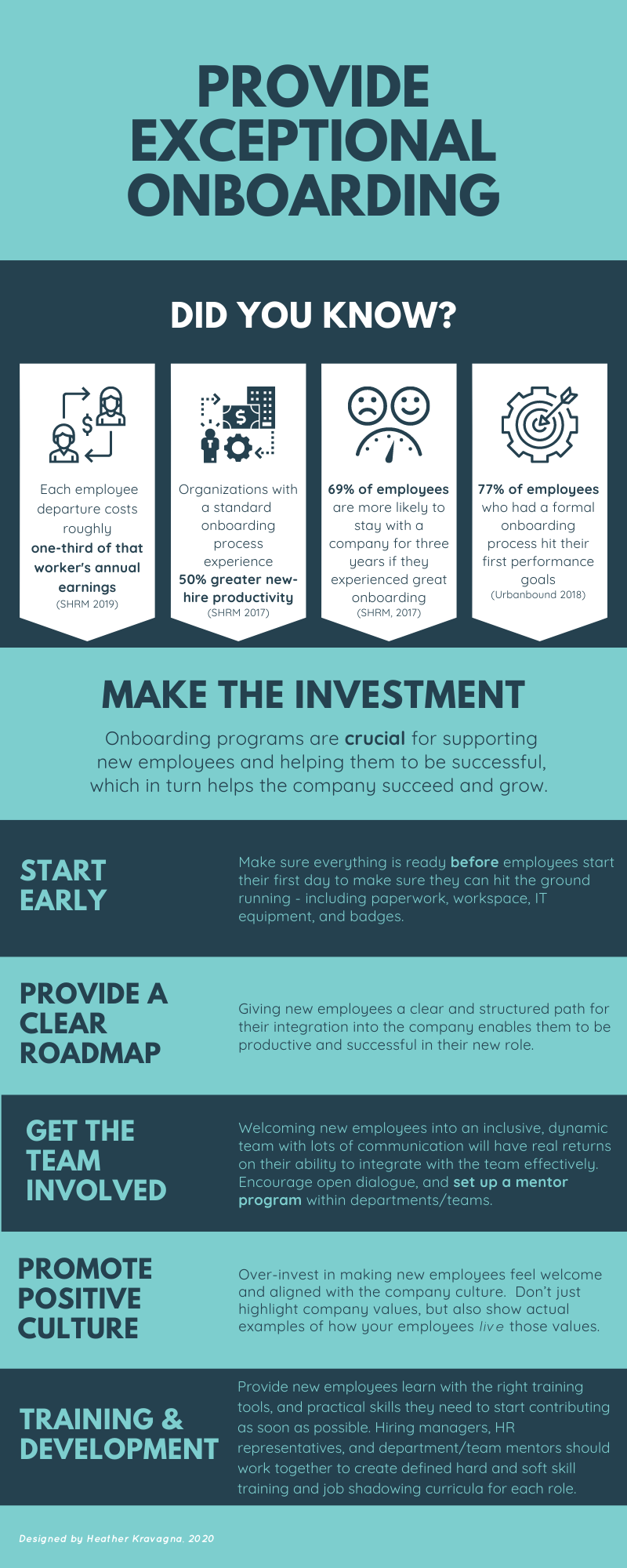
Onboarding Tips Infographic
Created with Canva, this infographic was developed from training I created for an Employee Mentor Program. The program utilized SMEs in each department/team in the company and trained and empowered them to become company brand/culture ambassadors and mentors for new employees. These mentors worked closely with the Learning and Development Team and hiring managers to develop 30, 60, and 90-day training and job shadowing curricula to new hires, as well as ensure they had any tools, equipment, etc, they needed to provide a smooth and positive transition into their new roles, increasing productivity, improving the employee experience and employee retention.

Customer Experience: Understanding Your Behavioral Style, and How to Interact with Others
Adapted from a day-long live class, this micro-learning module will review the four primary behavioral styles, and provide insight on how individuals can identify and react to styles different from their own, allowing for improved communication and positive interactions and experiences not only between employees and external customers, vendors or investors, but between employees, and internal customers – their peers, supervisors, and subordinates, as well.
 Kravagna Learning & Design